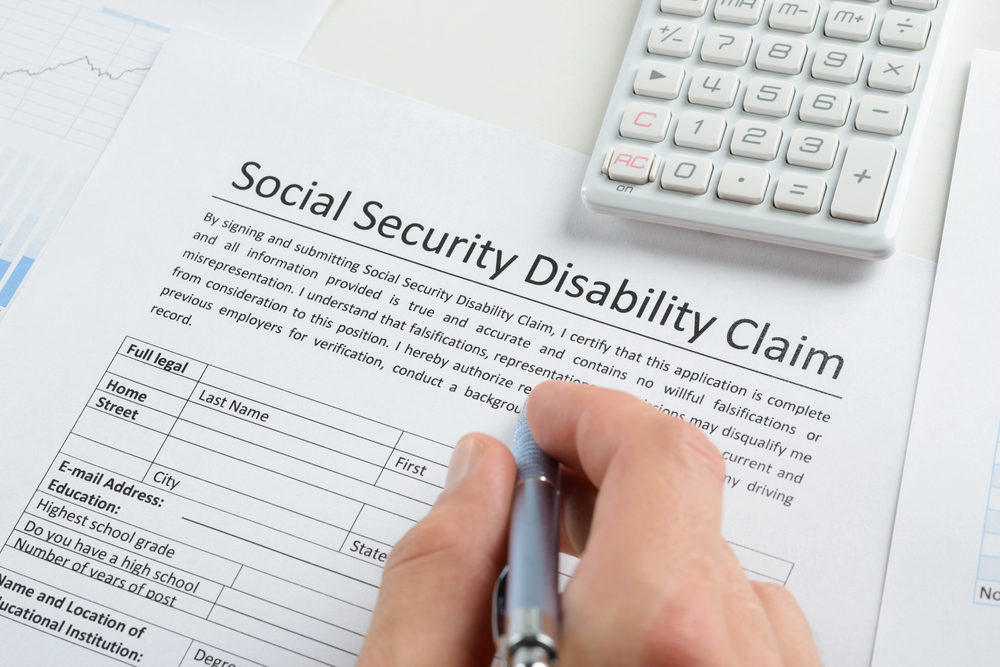
Many people in Columbus, OH struggle with conditions that make working difficult or even impossible, and a Social Security disability claim can provide monthly payments to cover living expenses. The Social Security Administration (SSA) runs two main programs: Social Security Disability Insurance (SSDI) and Supplemental Security Income (SSI), and both can potentially help.
The Basic Definition of Disability
The SSA uses a strict definition of disability. Your condition must prevent you from doing substantial gainful activity (SGA), which means earning more than a certain amount per month through work. In 2026, the SGA limit for non-blind individuals is $1,690 per month. If you earn above that level, you generally do not qualify, regardless of your health issues. For the blind, the limit is $2,830, and these amounts change with the national average wage index regularly.
Credits
SSDI pays benefits based on your work history and Social Security taxes paid. To qualify, you need at least 40 credits, and these come from earnings you’ve made over the years. You can get up to four credits per year, and in 2026, you earn one credit for every $1,890 in wages or self-employment income.
Younger workers require fewer credits, but the exact number depends on your age at the onset of your disability, and you must also meet the medical definition of disability. The SSA reviews medical records, doctor statements, and test results carefully.
Income and Resources Limits
SSI provides payments to people with limited income and resources, regardless of their work history, and it covers adults who are disabled, blind, or age 65 or older, as well as certain children. For adults, the medical rules are the same as with SSDI, and the income limits are also very inflexible.
For 2026, your countable income can’t be more than about $2,019 per month from work for individuals, though the exact figure is ultimately adjusted based on other factors, like your living arrangements. They’ll also look at your personal resources, such as a savings account or any property you have other than your home and one vehicle. Those resources can’t be more than $2,000 for a single person or $3,000 for a couple.
How Your Claim Is Evaluated
The SSA follows a five-step process to decide eligibility. They’ll ask the following questions:
- Are you working and earning above the SGA limit? If yes, the claim stops.
- Is your impairment severe enough? It must significantly limit basic work functions and must have lasted or be expected to last 12 months (unless it is expected to result in death)
- Does your condition meet or equal the impairment listing in the SSA’s Blue Book? This book lists impairments by body system with specific medical criteria, and if you don’t meet the criteria, you don’t qualify.
- Can you work any job that you previously had? The SSA considers jobs you held in the last 15 years to ascertain what your skills might be.
- Can you adjust to other work? They’ll look at your age, education, skills, and residual functional capacity.
Talk to a Lawyer in Columbus, OH
If you are dealing with a disabling condition, we can help you in assessing your case and getting through the application process effectively. Contact Barkan Meizlish DeRose Cox, LLP now for more help.
Connect with us


- June 2026
- May 2026
- April 2026
- March 2026
- February 2026
- January 2026
- December 2025
- November 2025
- October 2025
- September 2025
- August 2025
- June 2025
- September 2023
- March 2023
- January 2023
- November 2022
- October 2022
- July 2022
- May 2022
- April 2022
- February 2022
- January 2022
- July 2021
- March 2021
- October 2020
- September 2020
- August 2020
- July 2020
- June 2020
- May 2020
- April 2020
- March 2020
- February 2020
- January 2020
- December 2019
- November 2019
- October 2019
- July 2019
- May 2019
- April 2019
- January 2019
- November 2018
- March 2018
- February 2018
- December 2017
- November 2017
- August 2017
- July 2017
- June 2017
- December 2015
- November 2015
- October 2015
- September 2015
- August 2015
- July 2015
- June 2015
- May 2015
Archives

Columbus Office
- 740-204-2125
-
4200 Regent St Ste 210
Columbus, OH 43219
Pittsburgh Office
- 412-330-1821
-
428 Boulevard of the Allies
1st Floor
Pittsburgh, PA 15219
Hours
Mon-Fri 8:30am-5:00pm
Sat-Sun Closed
Call Us 24 Hours a Day